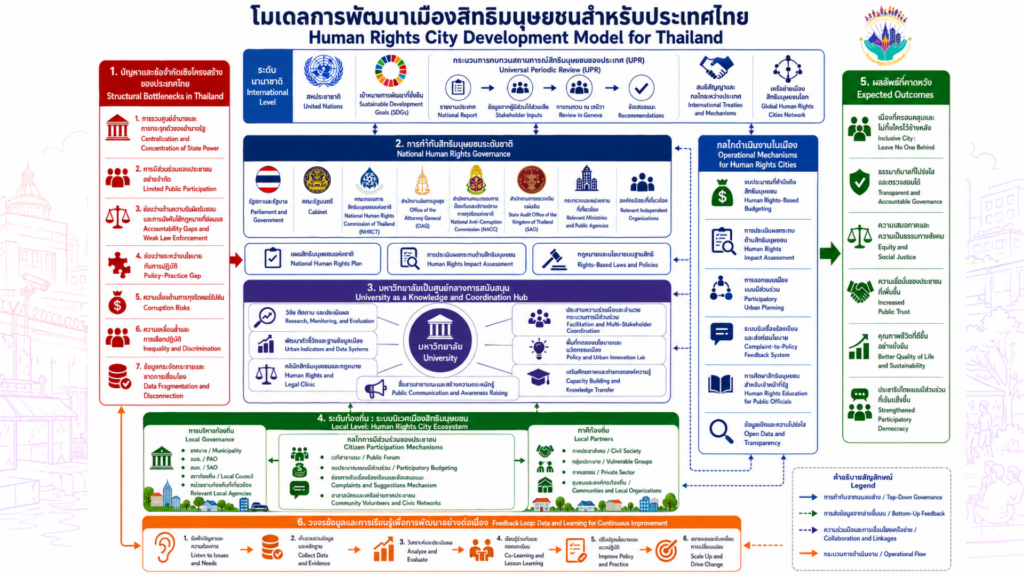
โมเดลเมืองสิทธิมนุษยชน (Human Rights City Model) เป็นกรอบแนวคิดที่ใช้ในการวิเคราะห์และออกแบบการพัฒนาเมืองบนฐานหลักสิทธิมนุษยชน โดยมุ่งให้ สิทธิ ศักดิ์ศรี และการมีส่วนร่วมของประชาชน เป็นหัวใจของการกำหนดนโยบายและการบริหารจัดการเมืองในทุกมิติ
โมเดลนี้พัฒนาขึ้นจากการศึกษาบทเรียนเมืองต้นแบบด้านสิทธิมนุษยชนในระดับนานาชาติ ได้แก่ ลุนด์ (Lund) ประเทศสวีเดน, ยอร์ก (York) สหราชอาณาจักร, เวียนนา (Vienna) ประเทศออสเตรีย และ กวางจู (Gwangju) ประเทศเกาหลีใต้ โดยนำตัวชี้วัด กลไกเชิงนโยบาย และกระบวนการมีส่วนร่วมของแต่ละเมืองมาวิเคราะห์เปรียบเทียบ เพื่อสังเคราะห์เป็นกรอบโมเดลที่สามารถปรับใช้กับบริบทของประเทศไทยได้
โมเดลดังกล่าวประกอบด้วยองค์ประกอบสำคัญ เช่น
- โครงสร้างการบริหารจัดการเมืองที่ยึดหลักความรับผิดรับชอบ ความโปร่งใส และการไม่เลือกปฏิบัติ
- กลไกการมีส่วนร่วมของประชาชนและภาคประชาสังคมในกระบวนการกำหนดนโยบาย
- ระบบตัวชี้วัดด้านสิทธิมนุษยชนที่สะท้อนคุณภาพชีวิต ความเสมอภาค และการเข้าถึงบริการสาธารณะ
- การเชื่อมโยงเมืองกับกรอบมาตรฐานสิทธิมนุษยชนระดับชาติและสากล
โมเดลเมืองสิทธิมนุษยชนจึงไม่ใช่เพียงเครื่องมือในการประเมินเมืองเท่านั้น แต่ยังเป็น “เครื่องมือเชิงนโยบายและการเรียนรู้” ที่ช่วยให้เมืองสามารถพัฒนาอย่างยั่งยืน ลดความเหลื่อมล้ำ และเสริมสร้างความไว้วางใจระหว่างรัฐกับประชาชนในระยะยาว
โมเดลนี้เป็น กรอบเชิงระบบ (systemic framework) สำหรับการพัฒนาเมืองสิทธิมนุษยชน โดยยึดหลัก Human Rights–Based Approach (HRBA) และออกแบบให้ “สิทธิ” ไม่ได้อยู่แค่ในเอกสารนโยบาย แต่ฝังอยู่ในโครงสร้าง การปฏิบัติ และชีวิตประจำวันของเมือง
[English]
The Human Rights City Model is a conceptual framework for analyzing and designing urban development based on human rights principles. It places human rights, human dignity, and public participation at the center of policymaking and urban governance across all dimensions of city development.
This model was developed through a comparative study of internationally recognized Human Rights Cities, including Lund in Sweden, York in the United Kingdom, Vienna in Austria, and Gwangju in South Korea. The research examined and compared the indicators, policy mechanisms, and participatory processes of each city in order to synthesize a framework that can be adapted to the Thai context.
The model consists of several key components, including:
- Urban governance structures grounded in accountability, transparency, and non-discrimination
- Participatory mechanisms that enable citizens and civil society to engage meaningfully in policymaking processes
- Human rights indicators reflecting quality of life, equality, and access to public services
- Connections between local urban governance and national as well as international human rights standards
The Human Rights City Model is therefore not merely an assessment tool for cities, but also a “policy and learning instrument” that supports sustainable urban development, reduces inequality, and strengthens long-term trust between the state and citizens.
More importantly, the model functions as a systemic framework for developing Human Rights Cities through a Human Rights–Based Approach (HRBA). It is designed to ensure that human rights are not confined to policy documents alone, but are embedded within the city’s institutional structures, governance practices, and everyday urban life.