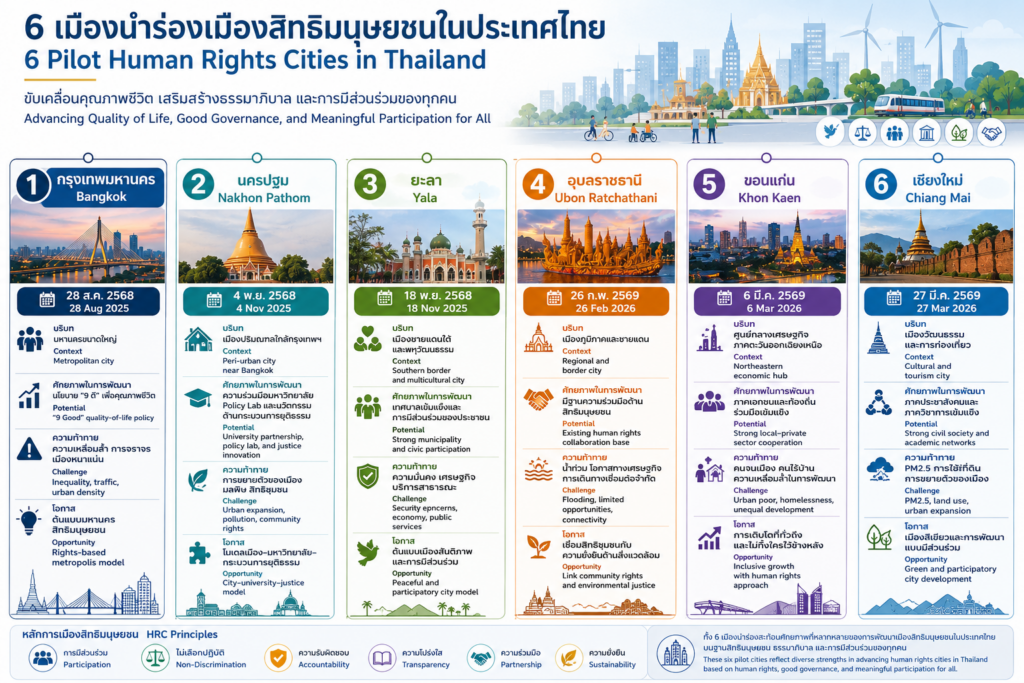
โครงการพัฒนาเมืองสิทธิมนุษยชน (Human Rights City) สำหรับบริบทประเทศไทย ได้คัดเลือก “พื้นที่นำร่อง” จำนวน 5 พื้นที่ เพื่อทดลองพัฒนาโมเดลเมืองสิทธิมนุษยชนให้สอดคล้องกับบริบททางสังคม วัฒนธรรม การเมือง และความท้าทายเฉพาะของแต่ละพื้นที่ โดยใช้กระบวนการมีส่วนร่วมระหว่างองค์กรปกครองส่วนท้องถิ่น ภาคประชาชน ภาควิชาการ และหน่วยงานภาครัฐ เพื่อร่วมกันออกแบบแนวทางพัฒนาเมืองที่ตั้งอยู่บนฐานสิทธิมนุษยชนและธรรมาภิบาล
1. นครปฐม (ศาลายา – พุทธมณฑล)
พื้นที่ศาลายาและพุทธมณฑล จังหวัดนครปฐม เป็นพื้นที่นำร่องที่สะท้อน “เมืองแห่งการเรียนรู้และความหลากหลาย” เนื่องจากเป็นที่ตั้งของสถาบันการศึกษาขนาดใหญ่และมีประชากรหลากหลายกลุ่ม ทั้งนักศึกษา คนทำงาน และชุมชนดั้งเดิม โครงการมุ่งเน้นการออกแบบเมืองที่ส่งเสริมการเข้าถึงบริการสาธารณะอย่างเท่าเทียม การพัฒนาพื้นที่สาธารณะที่ปลอดภัย และการสร้างกลไกการมีส่วนร่วมของประชาชนในการกำหนดอนาคตของเมืองร่วมกัน โดยมหาวิทยาลัยมีบทบาทสำคัญในฐานะศูนย์กลางองค์ความรู้และตัวกลางเชื่อมโยงภาคส่วนต่าง ๆ
2. ยะลา
เทศบาลนครยะลาเป็นพื้นที่นำร่องที่มีความสำคัญในมิติของ “สันติภาพ ความหลากหลายทางวัฒนธรรม และการอยู่ร่วมกัน” พื้นที่นี้สะท้อนบริบทเฉพาะของจังหวัดชายแดนภาคใต้ ซึ่งมีความหลากหลายทางศาสนา ชาติพันธุ์ และประวัติศาสตร์ทางสังคม โครงการจึงมุ่งสร้างกระบวนการพัฒนาเมืองที่เคารพอัตลักษณ์ท้องถิ่น เปิดพื้นที่การมีส่วนร่วมอย่างเท่าเทียม และส่งเสริมความไว้วางใจระหว่างประชาชนกับภาครัฐ รวมถึงพัฒนาแนวทางลดความเปราะบางและสร้างพื้นที่สาธารณะที่ทุกคนเข้าถึงได้อย่างปลอดภัย
3. อุบลราชธานี
จังหวัดอุบลราชธานีเป็นพื้นที่ที่สะท้อนความเชื่อมโยงระหว่าง “สิทธิชุมชน สิ่งแวดล้อม และการพัฒนาเมือง” โดยพื้นที่มีทั้งเขตเมืองขยายตัวอย่างรวดเร็วและพื้นที่ชุมชนดั้งเดิมที่ได้รับผลกระทบจากโครงการพัฒนา โครงการนำร่องในอุบลราชธานีจึงมุ่งเน้นการสร้างกระบวนการมีส่วนร่วมในการกำหนดนโยบายสาธารณะ การส่งเสริมสิทธิในการเข้าถึงทรัพยากร การจัดการสิ่งแวดล้อมอย่างยั่งยืน และการพัฒนาเมืองที่ไม่ทิ้งกลุ่มเปราะบางไว้ข้างหลัง
4. ขอนแก่น
ขอนแก่นเป็นตัวอย่างของเมืองภูมิภาคที่มีการเติบโตทางเศรษฐกิจและการพัฒนาโครงสร้างพื้นฐานอย่างรวดเร็ว โดยเฉพาะการพัฒนาเมืองอัจฉริยะ (Smart City) และระบบขนส่งสาธารณะ โครงการเมืองสิทธิมนุษยชนในขอนแก่นจึงมุ่งสร้างสมดุลระหว่าง “นวัตกรรมเมือง” กับ “สิทธิของประชาชน” ผ่านการผลักดันธรรมาภิบาล ความโปร่งใส การเข้าถึงบริการสาธารณะ และการเปิดพื้นที่ให้ประชาชนเข้ามามีส่วนร่วมในการกำหนดทิศทางการพัฒนาเมืองอย่างแท้จริง
5. เชียงใหม่
เชียงใหม่เป็นพื้นที่นำร่องที่สะท้อนความท้าทายของเมืองท่องเที่ยวและเมืองวัฒนธรรม ซึ่งต้องเผชิญทั้งปัญหาสิ่งแวดล้อม การขยายตัวของเมือง และความเหลื่อมล้ำในการเข้าถึงทรัพยากรเมือง โครงการมุ่งพัฒนาแนวคิด “เมืองสำหรับทุกคน” (Inclusive City) โดยส่งเสริมการมีส่วนร่วมของชุมชน กลุ่มชาติพันธุ์ เยาวชน ผู้สูงอายุ และกลุ่มเปราะบางต่าง ๆ ในการออกแบบอนาคตของเมือง ควบคู่กับการรักษาอัตลักษณ์ทางวัฒนธรรมและการพัฒนาเมืองอย่างยั่งยืน
พื้นที่นำร่องทั้ง 5 แห่งจึงทำหน้าที่เป็น “ห้องทดลองเชิงนโยบาย” (Policy Laboratory) สำหรับการพัฒนาโมเดลเมืองสิทธิมนุษยชนของประเทศไทย โดยแต่ละพื้นที่สะท้อนบริบท ปัญหา และศักยภาพที่แตกต่างกัน แต่มีเป้าหมายร่วมคือการสร้างเมืองที่เคารพศักดิ์ศรีความเป็นมนุษย์ ลดความเหลื่อมล้ำ และเปิดโอกาสให้ประชาชนทุกกลุ่มมีส่วนร่วมในการกำหนดอนาคตของเมืองอย่างเสมอภาคและยั่งยืน
[English]
Pilot Areas
The Human Rights City project in Thailand selected five pilot areas to experiment with and develop a Human Rights City model that reflects each locality’s unique social, cultural, political, and developmental context. The initiative emphasizes participatory collaboration among local governments, civil society, academic institutions, and public sector actors in order to co-design urban development approaches grounded in human rights principles and good governance.
1. Nakhon Pathom (Salaya – Phutthamonthon)
The Salaya–Phutthamonthon area in Nakhon Pathom Province represents a pilot area characterized by diversity, education, and urban expansion. As home to major universities and a rapidly growing population consisting of students, workers, and long-established local communities, the area reflects the challenges of creating an inclusive and livable urban environment. The project focuses on promoting equal access to public services, developing safe and accessible public spaces, and strengthening citizen participation in local decision-making. Universities play a significant role as knowledge hubs and institutional partners connecting different sectors within the city.
2. Yala
Yala Municipality serves as a pilot area that highlights peacebuilding, multicultural coexistence, and inclusive governance in Thailand’s southern border region. The city reflects a complex social context shaped by ethnic, cultural, and religious diversity. The Human Rights City initiative in Yala therefore emphasizes participatory urban development that respects local identities, builds trust between citizens and state institutions, and expands inclusive civic spaces for all communities. The project also seeks to reduce social vulnerability while fostering peaceful coexistence and community resilience.
3. Ubon Ratchathani
Ubon Ratchathani represents a pilot area where issues of community rights, environmental justice, and urban development intersect. The province faces rapid urbanization alongside pressures from large-scale development projects affecting local communities and natural resources. The project focuses on strengthening public participation in policymaking, promoting equitable access to resources, encouraging sustainable environmental governance, and ensuring that urban development benefits all groups, particularly vulnerable populations and marginalized communities.
4. Khon Kaen
Khon Kaen is recognized as one of Thailand’s leading regional cities in terms of economic growth, infrastructure development, and smart city innovation. The Human Rights City initiative in Khon Kaen seeks to balance technological modernization with human-centered urban governance. The project promotes transparency, accountability, accessible public services, and meaningful citizen participation in shaping the city’s future. It also explores how innovation and urban planning can support social inclusion and improve quality of life for all residents.
5. Chiang Mai
Chiang Mai reflects the challenges and opportunities of a major cultural and tourism city facing rapid urban transformation, environmental pressures, and social inequality. The project promotes the concept of an “Inclusive City” by encouraging participation from local communities, ethnic groups, youth, older persons, and other vulnerable populations in urban planning and decision-making processes. At the same time, the initiative emphasizes the preservation of cultural identity, sustainable urban development, and the creation of public spaces that are accessible and welcoming to everyone.
Together, these five pilot areas function as policy laboratories for developing a Human Rights City model suitable for Thailand. Although each city reflects different contexts, challenges, and strengths, they share a common goal: building cities that uphold human dignity, reduce inequality, strengthen democratic participation, and ensure that all people can meaningfully shape the future of their communities.